

Olive oil accounts for only a small share of the world's vegetable oil family. According to USDA data[1], global vegetable oil production in the 2025/26 season is projected at about 234.5 million tonnes, while the International Olive Council predicts global olive oil output of just 3.44 million tonnes[2] — roughly 1.5%. Yet this "niche" 1.5% carries irreplaceable health value, food culture and commercial significance. And the core force behind it is Spain.
Numbers Don't Lie: Spain Is the Ballast of the Global Olive Oil Industry
According to the International Olive Council's (COI) preliminary 2024/25 season statistics[2], global olive oil production was about 3.572 million tonnes. Of that, Spain alone contributed 1.419 million tonnes — nearly 40%. This is no accident; it is the industry moat forged by Spain's natural endowments, centuries of agronomic experience and a modern processing system.
Andalusia: Spain's "Olive Oil Heart" — a Byword for Quality
Within Spain, production is also highly concentrated. According to WIKIFARMER data[3], in the 25/26 season Andalusia remains the core of Spanish production, with 862 mills producing 953,508 tonnes — about 75% of the national total. Within the region, Jaén province dominates with 332 mills and 384,286 tonnes (about 30% of Spain's total), and the largest inventory of any province at 248,812 tonnes.
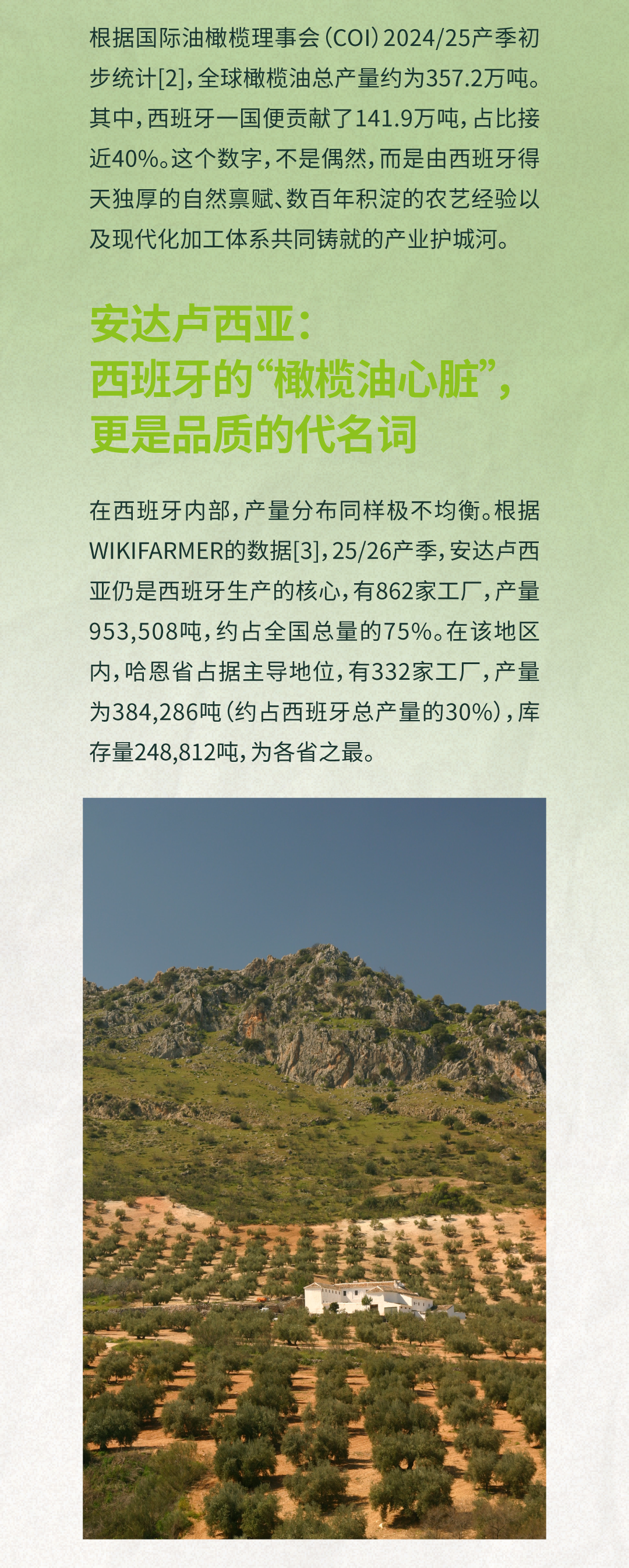
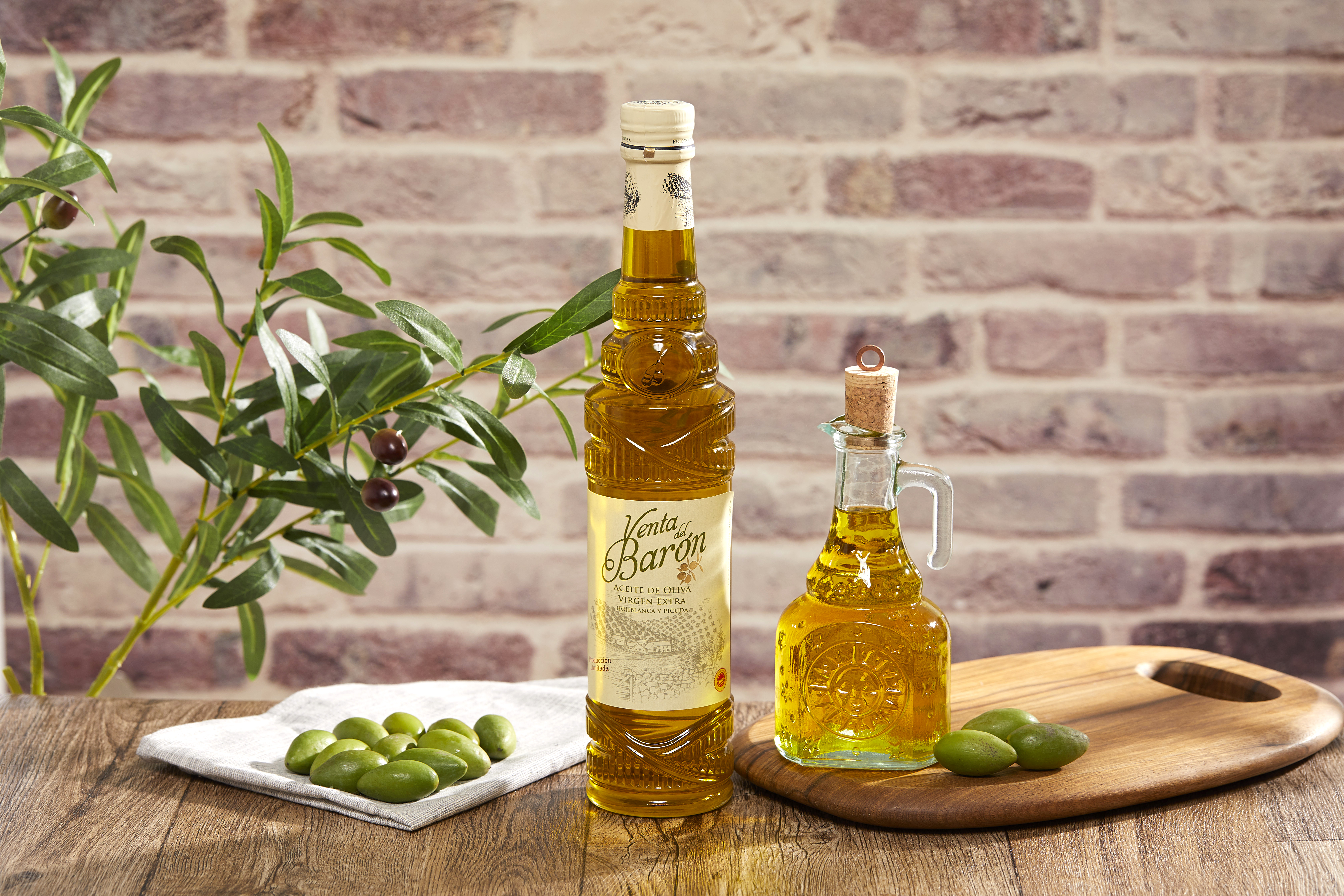
Andalusia is not only a production giant, but a treasure house of quality diversity. Its groves spread across hills and river valleys — from Córdoba to Jaén, from Sevilla to Granada — where different soils, altitudes and microclimates nurture dozens of local varieties including Picual, Hojiblanca and Picudo. Picudo is one of the raw varieties behind Pinlive's Barón olive oil, which has repeatedly won awards at major olive oil competitions. This diversity means Spanish olive oil need not chase a "single taste"; it can offer stylistically distinct high-quality extra virgin olive oils (AOVE) for different cooking scenes and consumer needs.
Big ≠ Rough: How Scale and Quality Coexist
Many ask: with such large output, can quality be guaranteed? This is precisely what makes Spain's olive oil industry worth understanding.
1. Scale does not mean crudeness. Spain has a complete cultivation, harvest, pressing and storage system.
2. Large output means a stable supply chain — and stability is the foundation of quality management. Olive oil freshness is affected by raw materials, processing, warehousing and transport. As one of the world's leading producers, Spain can supply consistently and evenly, enabling Pinlive to rely on its industrial system to complete sourcing, import in original bottles and distribution within reasonable cycles — shortening the journey from Spanish groves to Chinese kitchens and preserving more natural nutrition and flavor.
3. Regional concentration creates technology spillovers. Andalusian growers, cooperatives and mills share a strict, unified understanding of "what makes good oil," from physicochemical indicators to sensory evaluation. That is how Spain can keep producing gold-medal-grade AOVE at a scale of millions of tonnes.
Behind the Commercial Value Is a Long-Term Commitment to Health
Consumers pay a premium for Spanish AOVE not because of the word "imported," but because of tangible health benefits: high monounsaturated fatty acids, polyphenol antioxidants, thermal stability suited to Chinese stir-frying — recognized again and again in use.
Since entering the Chinese market in 2000, Pinlive has insisted for 26 years on sourcing extra virgin olive oil only from Andalusia, Spain's core producing region. We know that the end point of business is not profit but trust. And the foundation of trust is building a health moat from kitchen to table for every Chinese family with good fruit, good craft and good standards from the region.
Pinlive does not dodge industry realities or overstate "freshness" promises. What we can do is rely on Spain's industrial strength as one of the world's leading olive oil producers, and with 26 years of strict standards, deliver olive oil that is traceable in quality, safe in assurance and uncompromising in flavor.
References
[1] USDA Economic Research Service (ERS), Oil Crops Outlook, May 2025. (2025/26 season forecasts)
[2] International Olive Council: December 2025 statistics and forecasts for the olive industry, published January 2026
[3] WIKIFARMER, Global Vegetable Oil Markets: Supply, Trade and Differentiated Regional Dynamics, published 17 April 2026
Related Reading
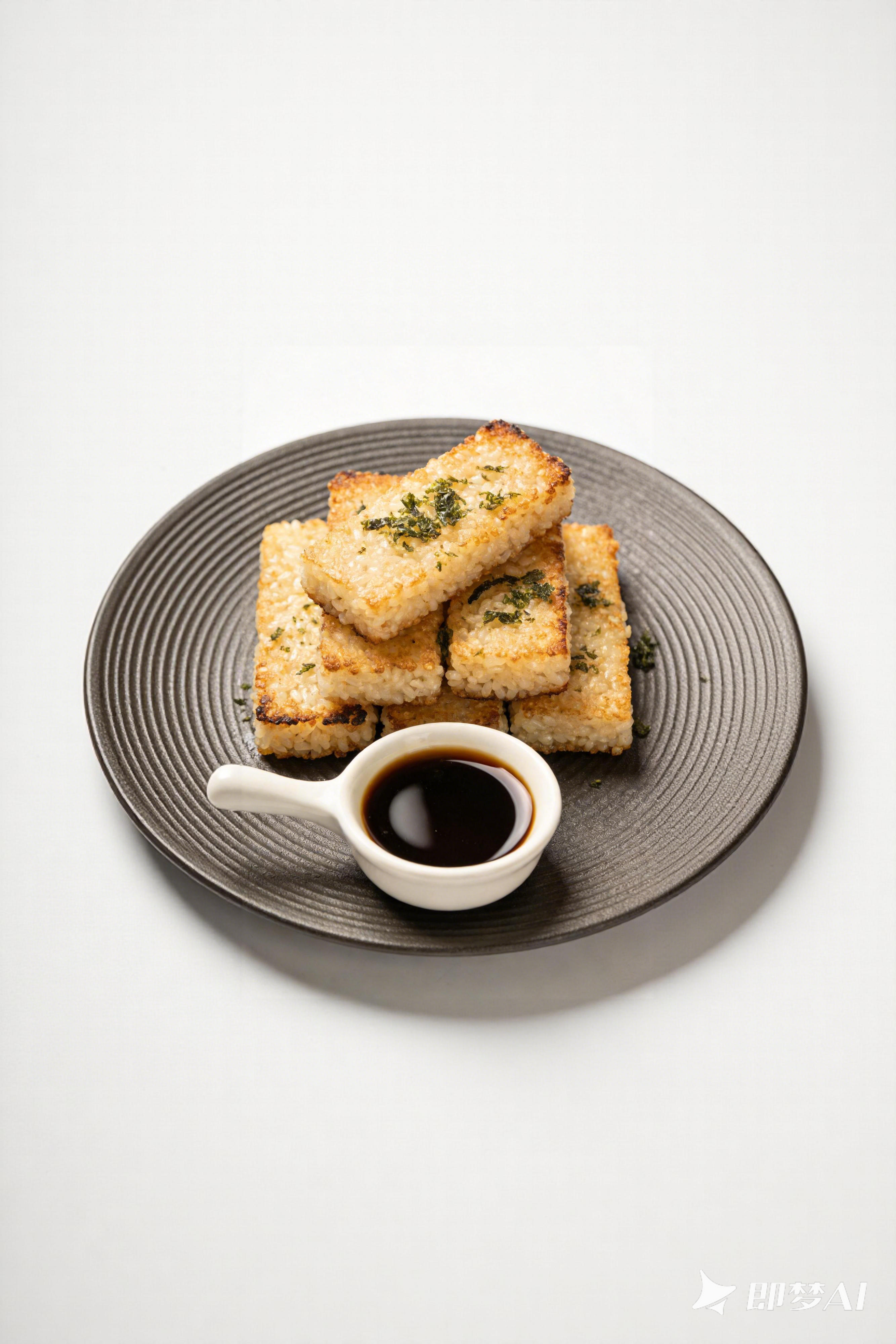
Science confirms EVOO is one of the most stable oils when heated — verified with Cifang cake, roast chicken and stir-fried luffa.
Learn More →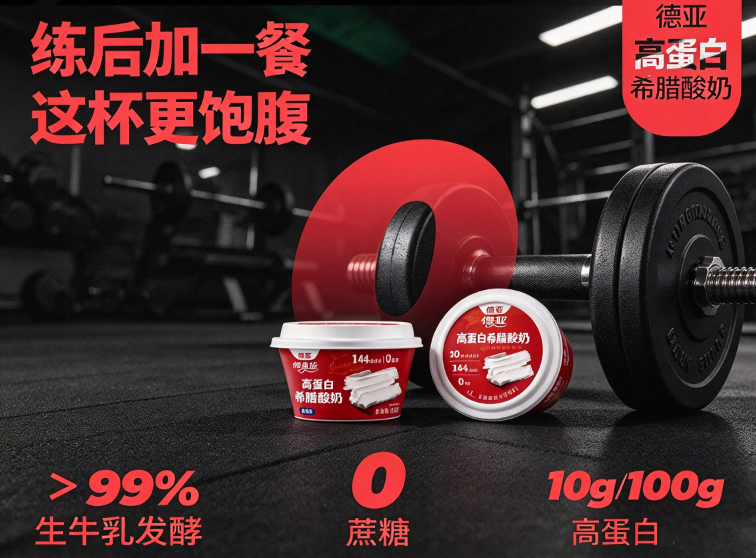
Research shows high-protein yogurt delays hunger by about an hour — a smarter post-workout snack.
Learn More →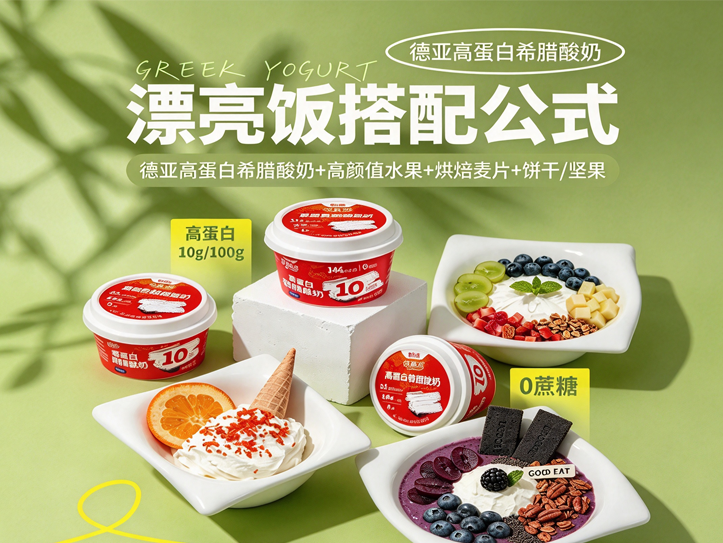
A beautiful pairing formula for Weidendorf high-protein Greek yogurt — thick and creamy like gelato.
Learn More →